Many people choose to replace teeth with implants because they offer a strong and natural-looking solution. Your initial thought is likely to be: Are dental implants safe? If you are missing a tooth, and someone has recommended it to you. It’s a fair thing to wonder. When you are about to undergo a procedure that involves surgery, particularly when it is in your mouth, you want truthful answers, not mere words of assurance.
But here’s the point: dental implants are safe, at least for most people. They have been in existence for decades, and they do the job, and millions of people have had them successfully. But, as with anything medical, they are not risk-free. Getting the other side of the coin can help you make a decision that you will be proud of.
Table of Contents
ToggleWhat Really Goes on When You Have an Implant?
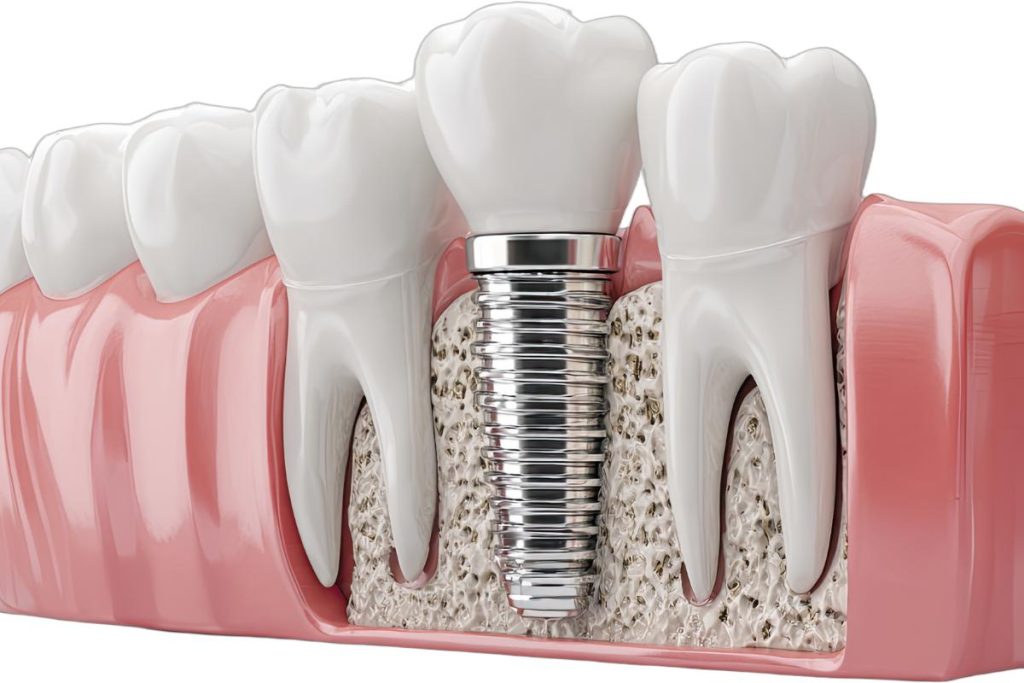
Imagine that a dental implant is a fake tooth root. It is a tiny titanium post inserted into your jawbone. The bone gradually surrounds it over the next few months – a process known as osseointegration, or in other words, locking it in place.
When that occurs, a crown (the visible part of the tooth) is placed top. Its final product resembles and acts like an actual tooth. You are able to eat, talk, and smile without giving it a second thought. Unlike dentures, it doesn’t shift or slip. It just works.
The Reason behind their good track record
The success rate of dental implants is consistently 95%. Any medical procedure is really impressive.
Much of their success is due to the material. Titanium is biocompatible- the body does not consider it a foreign threat. It is reactive and not defensive. Most implants, including hip replacement, have been safely done using the same material many years.
In modern planning, one can also find a big role. The dentists apply 3D scans and digital images to plan precisely where each implant will be placed prior to the initial incision. That sort of accuracy eliminates much of the guesswork in the equation.
Risks of Implants
Things can go wrong, and you ought to know what they are.
The most likely concern is likely to be infection. It can happen post-surgery if the area isn’t kept clean. A majority of the cases can be prevented by proper hygiene and adherence to the aftercare guidelines of your dentist.
Implant failure
When the implant fails to cement with the bone, does occur occasionally. The odds can be increased by smoking, poor bone density, or the presence of underlying health issues such as uncontrolled diabetes.
Nerve damage is infrequent, but may result in temporary numbness or tingling in the lips or chin. This risk is reduced significantly by a skilled surgeon.
There are usually times when sinus problems arise when the implants are fitted in the upper jaw. This is normally prevented by good pre-surgical planning.
None of these risks is to panic about; they are just things that you can discuss with your dentist so that you enter the dental clinic with a clear mind.
Who’s a Good Fit?
Not all people are suitable candidates, and that is alright.
Ideally, you will possess sufficient healthy jawbone to hold the implant in place, and your gums are in good condition. Age, frankly, is not a huge obstacle; both individuals in their 20s and individuals in their 70s could undergo an implant and actually be successful.
The trickier part lies in cases of smokers or individuals with conditions
such as diabetes. These don’t necessarily rule implants out, but they do affect healing and long-term success. Those will have to be taken into consideration by your dentist.
Why do people prefer Implants to others?
Dentures are effective for many individuals, but they have restrictions; they may be slippery, they require readjustments, and some individuals find them uncomfortable over time. Bridges are firmer, though; they involve grinding down the adjacent healthy teeth to secure them, which isn’t ideal.
Implants do not trade off either of those. They don’t touch or affect the surrounding teeth. They act in a similar manner as stimulating a natural tooth root, which, in fact, prevents bone loss over time. And when properly attended to, they will last a lifetime- decades.
What does Healing really look like?
You can also anticipate a few days of swelling and mild pain after having your implant placed. It is your body doing its job, and it is quite normal. The majority of the population copes with it using over-the-counter painkillers.
The more gradual the healing process, the longer it takes for the bone surrounding the implant to be incorporated into the person, which can be several weeks or even months. Soft foods and good oral health are the best friends during that period. Your dentist will check in on you to ensure everything is going as planned.
Easy Things to Do to Prepare to Be Successful
The most important factor in a good outcome? Finding a dentist with whom you can identify. Here, experience is more important than in most procedures.
More than that: maintain hygiene in the region, avoid smoking, and make your follow-up appointments. Little things do matter.
Final Thoughts
One of the most tried-and-tested successful practices in contemporary dentistry is dental implant placement. They are not risk-free, but nothing in medicine is, but the risks can be dealt with, and the benefits are high.
If you are seriously considering them, the next most appropriate step is to have a clear conversation with your dentist. They may examine your particular case, your bone, your health history, and your objectives, and provide you with a better idea of replace teeth with implants.
Implants do not merely replace a tooth; they are done right. They restore to you what you had likely forgotten you lacked, the liberty to eat, laugh, and smile without even a second thought about the matter.